

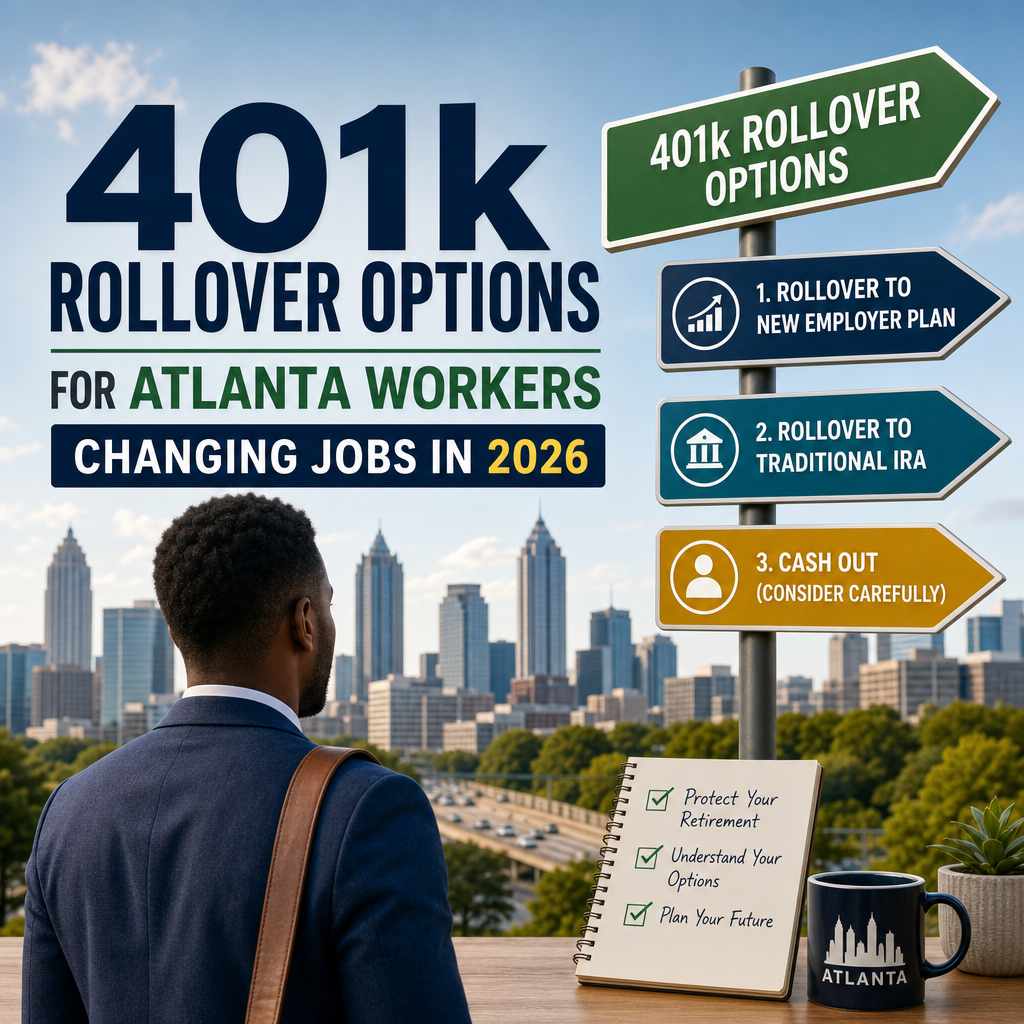
401k Rollover Options for Atlanta Workers Changing Jobs in 2026
401k Rollover Options for Atlanta Workers Changing Jobs in 2026
Changing jobs can be exciting, especially in a fast-moving market like Atlanta. But one of the biggest financial decisions during a career move is what to do with an old 401(k). If you are comparing 401k rollover options for Atlanta workers changing jobs in 2026, the good news is that you have several solid paths. The key is choosing the one that fits your goals, your new employer, and your long-term retirement plan.
A rollover is not just paperwork. It can affect your taxes, investment choices, fees, and how easy it is to manage your savings over time. Here is a clear look at the main options.
Why a 401(k) Rollover Matters
When you leave a job, your retirement account does not have to stay behind. In many cases, you can move it without creating a taxable event. That matters because keeping retirement money in one place can make it easier to track and potentially reduce fees.
For Atlanta workers changing jobs in 2026, this is especially important if you are moving between employers in industries like logistics, healthcare, technology, or finance, where job changes are common. A rollover can help you keep your retirement savings organized as your career evolves.
Option 1: Leave the Money in Your Old 401(k)
One of the simplest choices is to do nothing and leave your money in your former employer’s plan, if allowed.
Pros
- No immediate action required
- Your money stays tax-deferred
- You may keep access to low-cost institutional funds
Cons
- You may have limited control over the account
- Some plans charge higher administrative fees for former employees
- Managing multiple old accounts can become confusing
This can work if the plan has good investment options and low fees, but it is often not the best long-term solution.
Option 2: Roll It Into Your New Employer’s 401(k)
If your new employer offers a 401(k) and accepts rollovers, this can be a convenient choice. It keeps your retirement savings in one workplace plan and may make it easier to manage contributions going forward.
Why this might appeal to Atlanta workers
Many workers prefer one account instead of juggling several. If you are switching jobs in 2026 and your new employer has a strong retirement plan with matching contributions, moving your old balance into the new plan can simplify things.
Watch for
- Limited investment options
- Plan-specific rules for rollovers
- Higher fees than an IRA in some cases
Before making the move, compare the new plan’s investment lineup and fees with your old account.
Option 3: Roll It Into an IRA
A rollover IRA is one of the most flexible options. You can open an IRA with a brokerage or financial institution and transfer your old 401(k) funds there.
Advantages
- More investment choices than most 401(k) plans
- Easier to consolidate retirement accounts
- Potentially lower fees
- Greater control over how your money is invested
Things to know
If you want to make a backdoor Roth IRA contribution in the future, a traditional IRA rollover can create tax complications. It is smart to think about your broader tax strategy before choosing this option.
For many Atlanta workers changing jobs in 2026, this is the most flexible rollover path, especially if they want more control over their investments.
Option 4: Cash Out the Account
You can cash out your old 401(k), but this is usually the least attractive option.
Why it is risky
- The money is generally subject to income taxes
- If you are under 59½, you may owe an early withdrawal penalty
- You lose future tax-deferred growth
Even a small cash-out can shrink your retirement savings dramatically over time. Unless you are in a true emergency, this is usually not the best move.
Direct Rollover vs. Indirect Rollover
If you choose to move the money, pay close attention to how it is transferred.
Direct rollover
The money moves directly from one retirement account to another. This is usually the safest and simplest method because the funds do not pass through your hands.
Indirect rollover
Your old plan sends the money to you, and you must deposit it into another retirement account within 60 days. Taxes may be withheld, and if you miss the deadline, the withdrawal can become taxable.
Most workers are better off using a direct rollover whenever possible.
Questions to Ask Before You Decide
Before selecting a rollover path, ask these questions:
- What are the fees in each account option?
- How strong are the investment choices?
- Will I need the money soon?
- Does my new employer match contributions?
- Do I want more control, or more simplicity?
- Could this choice affect my future tax planning?
A little comparison now can prevent problems later.
A Smart Move for 2026 Job Changes
If you are changing jobs in Atlanta in 2026, your 401(k) does not have to become an afterthought. The best 401k rollover options for Atlanta workers changing jobs in 2026 usually come down to three practical choices: leave the money where it is, move it to your new employer’s plan, or roll it into an IRA.
The right choice depends on your career plans, your tax situation, and how hands-on you want to be with your retirement savings. Take time to compare fees, investment options, and rules before making a decision. A thoughtful rollover today can help you protect and grow your savings for years to come.