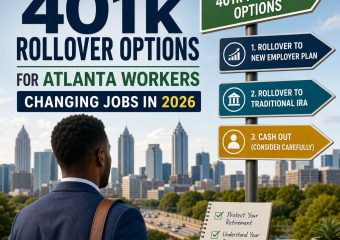


What to Do With an Old 401k After Moving to Atlanta
What To Do With an Old 401(k) After Moving to Atlanta
Moving to Atlanta often means a fresh start: a new neighborhood, new commute, and maybe a new job. But one thing people often forget in the shuffle is an old retirement account.
If you’ve left a job behind, you may be wondering what to do with an old 401(k) after moving to Atlanta. The good news is that you have several options. The better news is that making the right choice now can help you avoid fees, simplify your finances, and keep your retirement savings on track.
Start by Finding Your Old 401(k)
Before making any moves, confirm where the account is and how much is in it.
If you’ve changed employers more than once, it’s easy to lose track of a retirement plan. Check old pay stubs, tax forms, and emails from your previous employer. You can also contact the company’s HR department or the plan provider directly.
Once you locate the account, ask for:
- The current balance
- Investment options
- Fees
- Vesting details
- Withdrawal and rollover rules
This gives you a clear picture before you decide what to do next.
Option 1: Leave the Money in the Old 401(k)
In some cases, you can simply leave the account where it is.
This can be a reasonable choice if:
- The balance is large enough to stay in the plan
- The investment options are strong
- Fees are low
- You’re happy with the account’s current setup
The downside is that it may become harder to manage over time, especially if you have several old retirement accounts from different jobs. You may also lose track of the account if you move again.
Leaving it in place is usually best only if the plan is solid and you want to avoid making a rushed decision.
Option 2: Roll It Into Your New Employer’s 401(k)
If your new job in Atlanta offers a 401(k), you may be able to roll your old balance into the new plan.
This can be a smart move if you want to keep your retirement savings in one place. It may also make it easier to:
- Track your contributions
- Rebalance investments
- Stay organized
- Potentially delay required distributions later in life
However, not every employer plan accepts rollovers. Check with your new HR or benefits department before starting the process.
Also compare the investment choices and fees in the new plan. A rollover only makes sense if the new account gives you good options.
Option 3: Roll It Into an IRA
For many people, rolling an old 401(k) into an IRA is one of the most flexible choices.
A rollover IRA may offer:
- More investment choices
- Greater control over your portfolio
- Easier account management
- No immediate taxes if done correctly
This is especially helpful if you want a wider range of funds, stocks, or bonds than a workplace plan provides.
There are two common ways to do it:
Direct Rollover
The money moves directly from your old 401(k) provider to your IRA custodian. This is usually the safest and simplest method.
Indirect Rollover
You receive the check yourself and must deposit it into a new retirement account within 60 days. This route can be risky because missing the deadline may trigger taxes and penalties.
If you’re unsure, a direct rollover is usually the better choice.
Option 4: Cash It Out
You can withdraw the money, but this is usually the least favorable option.
Taking a cash distribution from an old 401(k) can lead to:
- Income taxes
- A 10% early withdrawal penalty if you’re under 59½
- A smaller retirement nest egg
If you’re trying to cover moving costs in Atlanta or manage short-term expenses, it may be tempting. But cashing out can seriously hurt your future savings.
In most cases, this should be a last resort.
Don’t Forget the Details
Before you decide, review the fine print. Small differences can have a big impact.
Pay attention to:
- Account fees
- Investment performance
- Loan rules
- Early withdrawal penalties
- Roth vs. traditional 401(k) treatment
- Beneficiary designations
If your old 401(k) includes both pre-tax and Roth money, the rollover process may need extra care. You’ll want to keep those portions organized properly.
How Atlanta Life Can Affect Your Decision
A move to Atlanta often comes with new financial priorities. Rent, commuting costs, and lifestyle changes may all affect your cash flow. That’s why it helps to choose a retirement strategy that fits your new life.
If you just landed a new job, rolling funds into your employer’s plan or an IRA can simplify things while you settle in. If you’re taking time to transition, leaving the money where it is for a short period may be fine. The key is to avoid letting the account sit unattended for years.
Make a Decision and Keep Records
Once you choose a path, complete the paperwork carefully and save copies of everything.
Keep records of:
- Rollover forms
- Confirmation statements
- Tax documents
- Account transfer dates
This helps you avoid tax issues and makes future retirement planning much easier.
Final Thoughts
If you’re figuring out what to do with an old 401(k) after moving to Atlanta, you have a few solid choices: leave it alone, roll it into a new employer plan, move it to an IRA, or cash it out. For most people, a rollover offers the best mix of simplicity and long-term value.
The right option depends on your job situation, investment goals, and how much control you want over your retirement savings. Take the time to compare your choices now, and your future self will thank you later.