

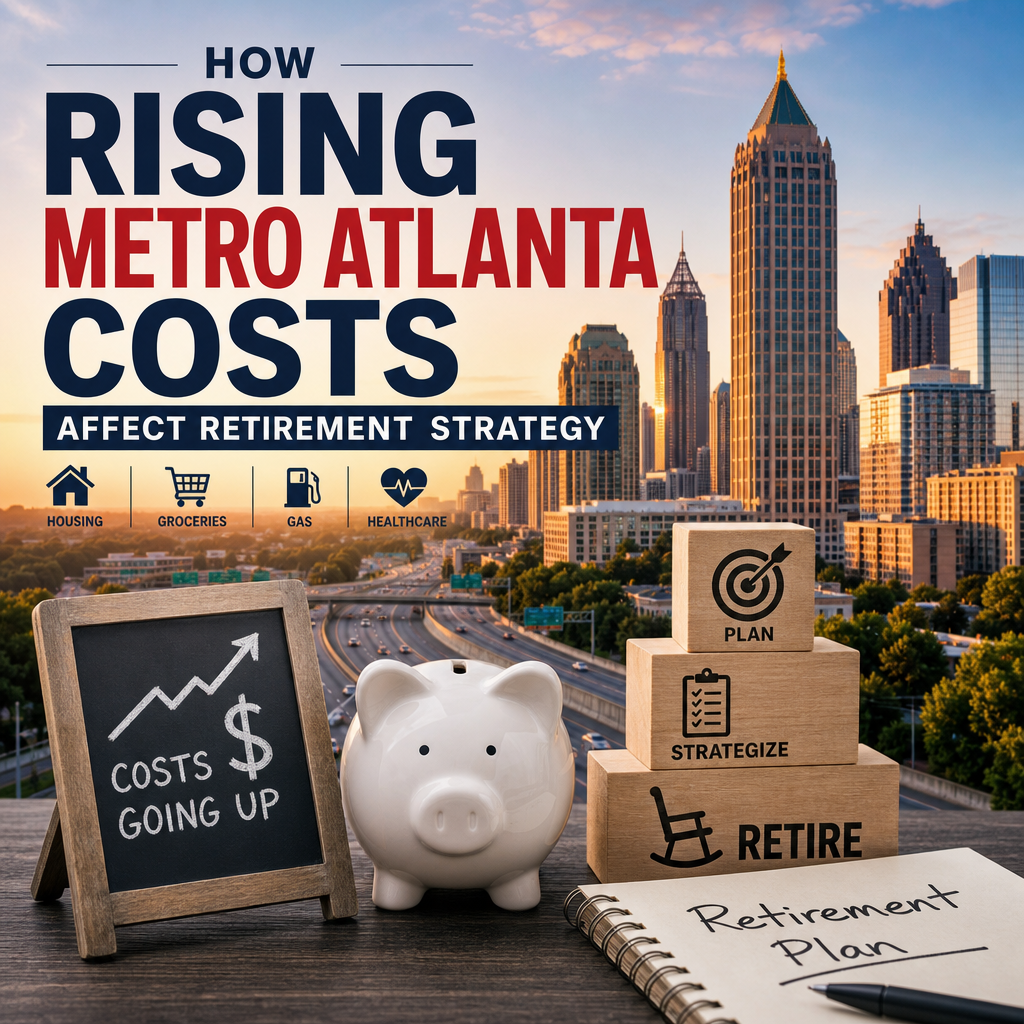
How Rising Metro Atlanta Costs Affect Retirement Strategy
How Rising Costs in Metro Atlanta Impact Your Retirement Strategy
Retirement planning is always about balancing today’s choices with tomorrow’s needs. But if you live in Metro Atlanta, that balance has become more complicated. How rising costs in Metro Atlanta impact your retirement strategy is no longer just a budgeting question—it’s a long-term planning issue that affects everything from housing to healthcare to how long your savings may last.
Metro Atlanta has seen steady increases in the cost of living in recent years. For retirees, that can mean higher monthly expenses and more pressure on fixed-income planning. If your retirement strategy was built on assumptions from even a few years ago, it may be time to revisit it.
Why Metro Atlanta Costs Matter More in Retirement
Retirement changes the way money works. During your working years, you may have had more flexibility to absorb higher expenses with income growth, bonuses, or side earnings. In retirement, that cushion is often smaller.
In Metro Atlanta, rising costs can affect several major areas:
- Housing: Property values, property taxes, insurance, and rent have all risen in many neighborhoods.
- Healthcare: Medical premiums, prescription costs, and out-of-pocket care expenses continue to climb.
- Transportation: Gas, car repairs, and insurance can add up quickly, especially if you’re living farther from major services.
- Everyday living: Groceries, utilities, and dining out all take a bigger bite out of a fixed monthly budget.
Even modest increases in these areas can make a meaningful difference over a 20- to 30-year retirement.
The Hidden Pressure on Fixed Income
Many retirees depend on a combination of Social Security, pensions, and investment withdrawals. The challenge is that these income sources do not always rise at the same pace as local expenses.
Social Security may not fully keep up
Social Security includes cost-of-living adjustments, but those increases may not match the actual inflation retirees feel in Metro Atlanta. If your rent, insurance, or healthcare costs rise faster than your income, your purchasing power shrinks.
Withdrawals need to be more flexible
A retirement portfolio designed for a certain withdrawal rate may no longer be enough if local costs climb faster than expected. Taking too much from investments too early can create long-term risk, especially in down markets.
Taxes can also play a role
Georgia’s tax rules and local property taxes may affect retirees differently depending on where they live and how their income is structured. Rising home values can also increase property tax exposure, especially if exemptions do not offset the increase.
Adjusting Your Retirement Strategy
A retirement strategy should not be static. As costs rise, your plan may need to adapt.
Reassess your budget regularly
Start by reviewing your current spending and comparing it to what you expect in the next five to ten years. Focus on the categories most likely to change:
- Housing
- Healthcare
- Transportation
- Food and utilities
- Travel and leisure
This helps you see whether your current retirement income can still support the lifestyle you want.
Build in more inflation protection
If your portfolio is too conservative, it may struggle to outpace inflation. Many retirees use a mix of assets that can help preserve growth over time, such as:
- Dividend-paying stocks
- Inflation-sensitive investments
- Bond ladders
- Cash reserves for short-term needs
The goal is not to take unnecessary risk, but to make sure your money can still support rising expenses.
Consider where you live
Housing is one of the biggest retirement costs. If you currently own a home in a high-cost area of Metro Atlanta, downsizing or relocating may free up cash flow. On the other hand, staying put may still make sense if the home is paid off and manageable.
Ask yourself:
- Is my current home affordable long term?
- Will maintenance and taxes continue to rise?
- Would a lower-cost area improve my retirement income outlook?
Planning for Healthcare and Long-Term Care
Healthcare is one of the most underestimated retirement expenses. In Metro Atlanta, access to quality care is strong, but that does not mean it is inexpensive.
As you plan, include:
- Medicare premiums and supplemental coverage
- Prescription drug costs
- Dental, vision, and hearing expenses
- Possible long-term care needs
A strategy that ignores these costs may look strong on paper but fall short in practice. Preparing for them early can help reduce financial stress later.
Protecting Your Income Over Time
A strong retirement strategy should help your money last through changing conditions. That means focusing on both growth and stability.
Some helpful steps include:
- Keeping part of your portfolio liquid for emergencies
- Reviewing withdrawal rates annually
- Delaying large discretionary expenses when markets are weak
- Working with a financial professional to stress-test your plan
The more realistic your projections, the better prepared you’ll be for a higher-cost environment.
Final Thoughts
How rising costs in Metro Atlanta impact your retirement strategy comes down to one idea: retirement planning must reflect real life, not just ideal assumptions. Rising housing, healthcare, and daily living costs can slowly erode even a well-built plan if you do not adjust for them.
By reviewing your budget, building inflation protection into your portfolio, and planning carefully for healthcare and housing, you can create a retirement strategy that is better prepared for today’s Metro Atlanta environment. The earlier you adapt, the more control you keep over your financial future.