

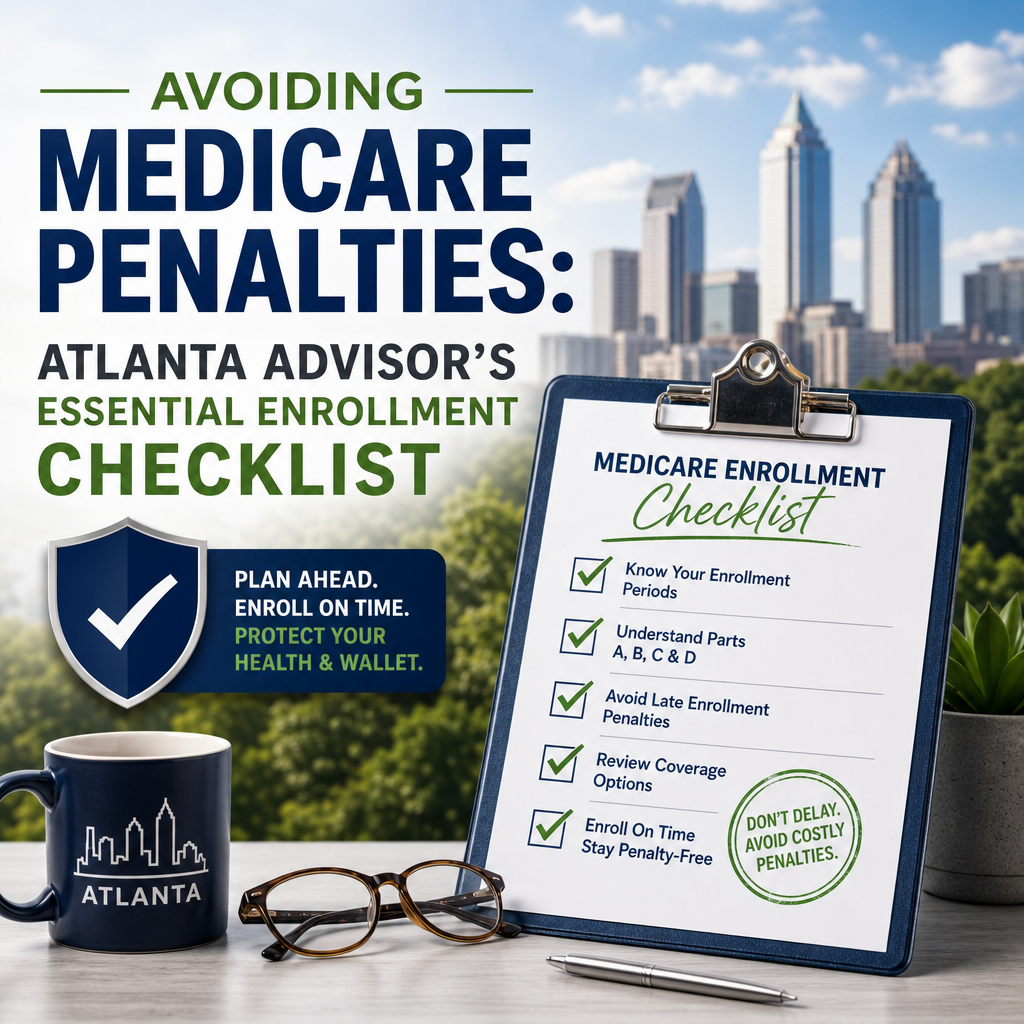
Avoiding Medicare Penalties: Atlanta Advisor’s Essential Enrollment Checklist
Avoiding Medicare Penalties: Atlanta Advisor’s Essential Checklist
Medicare can be a lifesaver, but missing a deadline can lead to lifelong penalties and avoidable costs. For many people, the rules feel confusing because Medicare enrollment depends on your age, work history, current coverage, and which parts of Medicare you need.
The good news: most penalties are preventable with a simple plan. This Avoiding Medicare Penalties: Atlanta Advisor’s Essential Checklist walks you through the key steps to stay on track and protect your budget.
Why Medicare penalties happen
Medicare penalties are usually tied to late enrollment. If you delay signing up for certain parts without having qualifying coverage, Medicare may charge you more for as long as you have coverage.
The most common penalties involve:
- Part B late enrollment
- Part D prescription drug late enrollment
- Delays in signing up after losing employer coverage
- Missing your Initial Enrollment Period or Special Enrollment Period
A little planning can save you from paying extra every month for years.
Step 1: Know your enrollment window
Your first major deadline is your Initial Enrollment Period. This is a 7-month window that includes:
- 3 months before the month you turn 65
- Your birthday month
- 3 months after your birthday month
This is the best time to enroll in Medicare if you are not already covered through qualifying employer insurance.
What to do
Mark your calendar early. If you wait too long, you could face gaps in coverage or penalties that are difficult to reverse.
Step 2: Confirm whether your current coverage counts
Many people in Atlanta delay Medicare because they still have health insurance through work. That can be fine, but only if the coverage is considered creditable and meets Medicare’s rules.
This matters especially for:
- Employer-sponsored health plans
- Retiree coverage
- COBRA
- Union plans
- Prescription drug coverage
Important note
Not all coverage protects you from Medicare penalties. For example, COBRA usually does not count as creditable coverage for delaying Part B. This is a common and costly mistake.
Step 3: Don’t miss your Special Enrollment Period
If you’re still working past age 65 and have qualifying employer coverage, you may be able to delay Part B without penalty. When that coverage ends, you usually get a Special Enrollment Period to sign up.
Checklist for this step
- Find out the exact date your employer coverage ends
- Ask for proof of creditable coverage if needed
- Enroll in Medicare promptly after the job or plan ends
- Keep copies of all paperwork
This is one of the most important parts of avoiding Medicare penalties because the timeline can move quickly.
Step 4: Enroll in Part D on time
Even if you do not take many prescriptions now, it’s smart to understand the Part D rules. If you go too long without creditable drug coverage, Medicare may add a penalty to your monthly premium.
Avoid Part D penalties by:
- Joining a Medicare drug plan when first eligible
- Keeping creditable prescription coverage if you delay enrollment
- Reviewing whether your current drug plan meets Medicare standards
If you skip Part D because you “don’t need it yet,” you may pay more later.
Step 5: Keep records of everything
A strong paper trail can save you headaches if Medicare questions your enrollment timing.
Save these documents:
- Employer coverage end dates
- Creditable coverage letters
- Enrollment confirmations
- Notices from HR or benefits administrators
- Medicare correspondence
If there is ever a dispute, clear records can help prove you met the rules.
Step 6: Review your situation every year
Medicare rules can change, and your own life can change too. Retirement, job changes, moving, or a spouse’s coverage ending can all affect your deadlines.
An annual review helps you catch issues before they become penalties.
Ask yourself:
- Did my work coverage change?
- Is my drug coverage still creditable?
- Did I miss any enrollment deadline?
- Did I move or retire this year?
A quick yearly review can prevent costly mistakes.
Step 7: Get help before you make a decision
Medicare is not the kind of program where guessing pays off. A small misunderstanding can trigger a penalty that lasts for years.
An experienced Atlanta Medicare advisor can help you:
- Compare your current coverage with Medicare rules
- Understand whether you can delay enrollment safely
- Identify deadlines for Part B and Part D
- Avoid common mistakes with COBRA, retirement, or spousal coverage
Getting guidance early is often the easiest way to avoid penalties altogether.
Quick checklist for avoiding Medicare penalties
Use this simple checklist to stay ahead of deadlines:
- [ ] Know your Initial Enrollment Period
- [ ] Confirm whether your current coverage is creditable
- [ ] Understand if you qualify for a Special Enrollment Period
- [ ] Enroll in Part D on time or keep creditable drug coverage
- [ ] Save all coverage and enrollment documents
- [ ] Review your Medicare needs every year
- [ ] Consult an advisor before delaying enrollment
Final thoughts
Medicare penalties are preventable, but only if you understand the rules before a deadline passes. Whether you are still working, preparing to retire, or helping a loved one with coverage, a careful approach can protect your health coverage and your wallet.
Use this Avoiding Medicare Penalties: Atlanta Advisor’s Essential Checklist as your starting point, and you’ll be in a much better position to make confident, timely Medicare decisions.
