
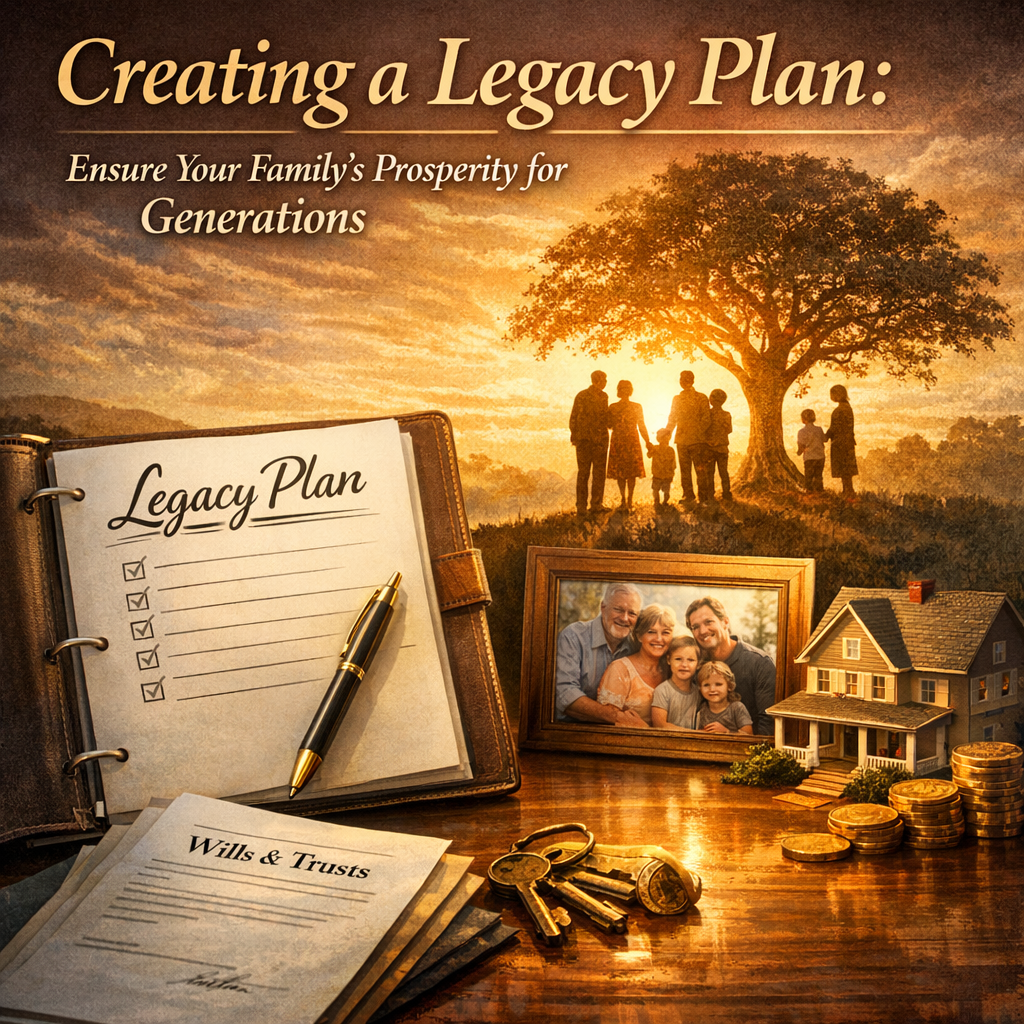
Creating a Legacy Plan: Ensure Your Family’s Prosperity for Generations
How to Create a Legacy Plan That Supports Your Family for Generations
Creating a legacy plan is about more than just managing your assets; it’s about setting a foundation that will support and guide your family through multiple generations. A well-thought-out legacy plan ensures that your values, assets, and memories are preserved and passed on in a manner that benefits your descendants. This guide provides practical steps to create a legacy plan that honors your intentions and supports your family long into the future.
Understand Your Goals
Define Your Legacy Objectives
Start by reflecting on what matters most to you. Consider how you want to be remembered and the impact you wish to make on future generations. Whether it’s through philanthropy, business, or personal values, your objectives will guide every aspect of your planning process.
Discuss With Family Members
Engage in conversations with your family to understand their aspirations and challenges. These discussions can provide valuable insights that shape a more meaningful and supportive legacy plan.
Inventory Your Assets
List Physical and Digital Assets
Compile a comprehensive list of your physical and digital assets. This includes everything from property and investments to digital accounts and social media. Understanding what you own is the first step in deciding how to distribute it.
Evaluate Non-Material Assets
Consider intangible assets such as your family stories, values, and wisdom. These are often overlooked but they are crucial to preserving your family’s identity and core values.
Legal Instruments for Legacy Planning
Will
Drafting a will is essential. It is the fundamental document that dictates how your assets should be distributed among your heirs. Ensure it is updated regularly to reflect any changes in your assets or in your family structure.
Trusts
Setting up trusts can be an effective way to manage your assets, providing controlled support to beneficiaries over time. Trusts can also help minimize estate taxes and protect your assets from legal complications.
Power of Attorney
Appointing a power of attorney gives someone you trust the authority to manage your affairs if you are unable to do so. This can include decisions about finances, health, and legal matters.
Invest in Family Education
Financial Literacy
Educate your family members about financial management, investments, and the responsibilities that come with inheriting wealth. Knowledge in these areas ensures they make wise decisions that amplify the benefits of your legacy.
History and Values
Share your family history, stories, and the values that helped shape your life. This nurtures a sense of identity and continuity among generations.
Philanthropy as a Legacy Tool
Establish Charitable Goals
If philanthropy is important to you, consider setting up charitable trusts or contributing to existing charities that reflect your values. This not only helps the community but also sets a precedent for generational giving.
Family Foundations
Creating a family foundation can be a way to involve multiple generations in philanthropic efforts. This encourages a spirit of service and unity among family members while impacting the wider community positively.
Regular Updates and Revisions
Review and Adjust Regularly
A legacy plan should evolve with your life circumstances and the changing dynamics of your family. Regular reviews—at least every five years or after major life events—ensure that your plan remains relevant and effective.
Utilize Professional Help
Engaging professionals such as estate planners, lawyers, and financial advisors can provide expertise and ensure that your legacy plan adheres to current laws and best practices.
Conclusion
Creating a comprehensive legacy plan is a profound way to ensure that your family is provided for in your absence and that your values live on. By following these steps, you can craft a plan that not only secures your financial assets but also fosters a strong family identity and commitment to community service. Remember, the key to a successful legacy plan lies in its ability to adapt to new challenges and opportunities. Regular updates, family involvement, and professional guidance are essential to this process.