

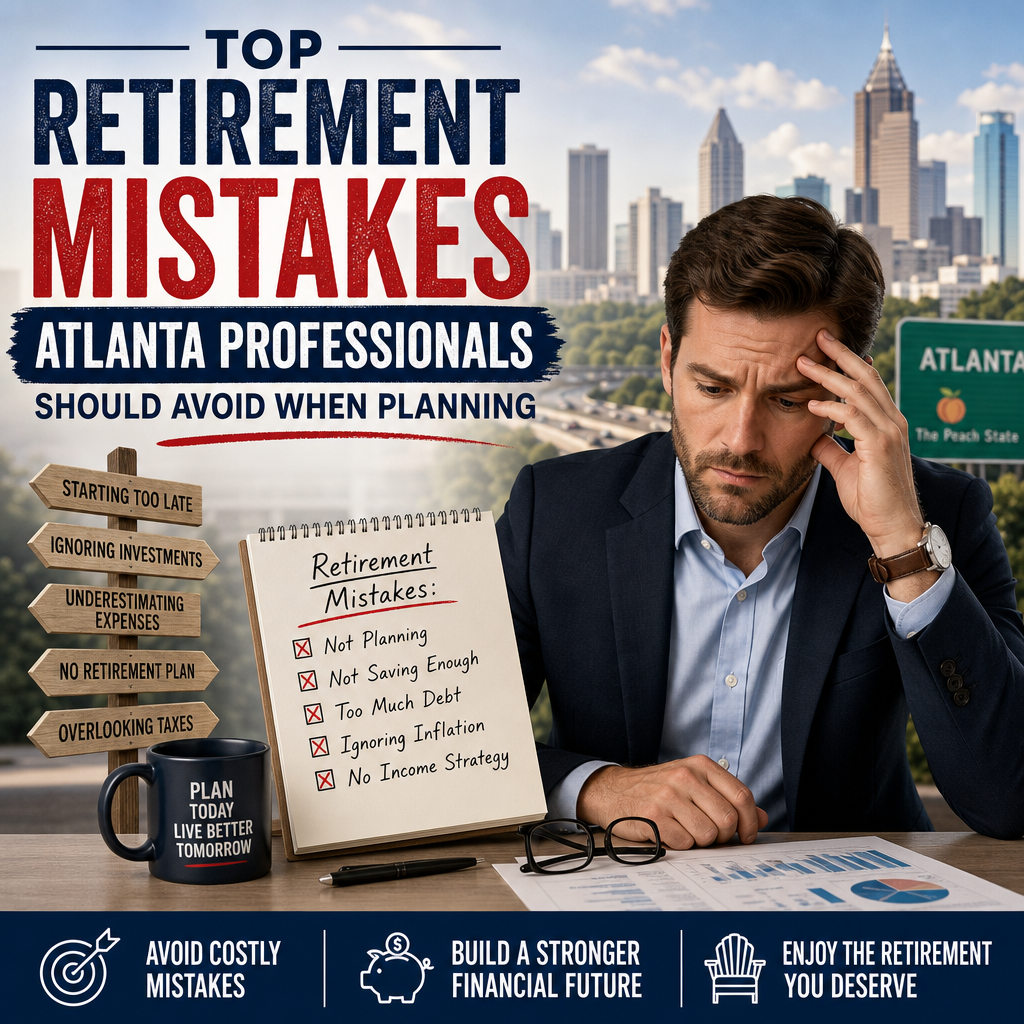
Top Retirement Mistakes Atlanta Professionals Should Avoid When Planning
Top Retirement Mistakes Atlanta Professionals Should Avoid
Retirement should feel like a reward for decades of hard work, but many Atlanta professionals make avoidable mistakes that can weaken their financial security later. Between high career demands, rising living costs, and the temptation to delay planning, it is easy to overlook important details. The good news is that most retirement setbacks can be prevented with a little foresight.
If you want to protect your future, it helps to understand the top retirement mistakes Atlanta professionals should avoid before they become expensive problems.
Waiting Too Long to Start Planning
One of the biggest retirement mistakes is putting off planning until your 50s or later. Many professionals assume they have time because their income is strong now. But retirement planning works best when you give your money more years to grow.
Even a few years of delay can reduce the power of compounding. Starting early gives you more flexibility, more investment growth, and less pressure to save huge amounts later.
Why this matters
- You may need to save more aggressively later
- Your investments have less time to grow
- You may miss out on employer retirement matches
- You could feel forced to make risky financial moves
The earlier you create a plan, the easier it is to stay on track.
Underestimating How Much Retirement Will Cost
Many Atlanta professionals assume retirement will be cheaper than working life. While some costs may decrease, others often increase. Healthcare, travel, home maintenance, and family support can add up quickly.
In a city like Atlanta, lifestyle expectations can also shape retirement spending. If you plan to stay active, travel frequently, or help children or aging parents, your expenses may be higher than expected.
Common costs people forget
- Health insurance and out-of-pocket medical care
- Long-term care
- Inflation
- Taxes on retirement income
- Housing and maintenance costs
A realistic retirement budget is far more useful than a hopeful guess.
Relying Too Much on One Source of Income
Another common mistake is assuming one retirement account will be enough. Some professionals lean heavily on a 401(k) and ignore other savings tools, pension benefits, or taxable investment accounts.
A more balanced plan can help reduce risk and create more flexibility. Retirement income often works best when it comes from multiple sources.
Useful income sources may include
- 401(k) or 403(b) plans
- Traditional or Roth IRAs
- Brokerage accounts
- Social Security
- Pension benefits, if available
- Health savings accounts, where applicable
Diversifying your retirement income can help protect you if one source underperforms.
Ignoring Taxes in Retirement Planning
Taxes do not disappear when you retire. In fact, many retirees are surprised by how much taxes can affect withdrawals from retirement accounts and other income sources.
For Atlanta professionals, especially those used to higher earnings, tax planning should be part of the retirement strategy from the start. Knowing how withdrawals, Social Security, and investment income are taxed can help you avoid unwelcome surprises.
Tax planning mistakes to avoid
- Taking large withdrawals without a strategy
- Forgetting required minimum distributions
- Ignoring the tax impact of investment sales
- Failing to coordinate withdrawals across account types
A tax-aware approach may help you keep more of what you saved.
Claiming Social Security Too Early
It can be tempting to start Social Security as soon as you are eligible, especially if you want to stop working quickly. But claiming early can permanently reduce your monthly benefit.
For many people, waiting a few extra years can make a meaningful difference. The right decision depends on health, income needs, family situation, and other assets. Still, making the choice too quickly is a mistake many professionals later regret.
Before claiming, consider
- Your expected lifespan
- Whether you still plan to work
- Your spouse’s benefits
- Your savings and income needs
- How much monthly income you will really need
Social Security should fit into your broader retirement income plan, not drive it.
Failing to Plan for Healthcare
Healthcare is one of the most overlooked parts of retirement. Even with Medicare, you may still face premiums, deductibles, copays, and services that are not fully covered.
Professionals who are healthy now may assume future medical costs will be manageable. However, healthcare expenses often rise with age. A good retirement plan should include a realistic healthcare strategy, especially if you retire before Medicare eligibility.
Key healthcare questions
- Will you need private insurance before age 65?
- How much will Medicare supplements cost?
- Are long-term care expenses included in your plan?
- Do you have enough cash reserves for unexpected medical bills?
Planning for healthcare early can reduce stress later.
Keeping Your Portfolio Too Conservative or Too Aggressive
Investment mistakes can be just as damaging as savings mistakes. Some people become too conservative too soon and lose growth potential. Others stay too aggressive and take unnecessary risk close to retirement.
The right balance depends on your age, goals, income sources, and comfort with market changes. A portfolio that is too cautious may not keep up with inflation, while one that is too risky may lead to large losses when you have less time to recover.
A smarter approach
- Review your allocation regularly
- Rebalance when needed
- Match risk to your retirement timeline
- Avoid emotional decisions during market swings
Your portfolio should support your retirement goals, not create extra uncertainty.
Final Thoughts
Avoiding retirement mistakes takes discipline, but the payoff is worth it. For Atlanta professionals, the key is to plan early, think realistically, and build flexibility into every part of the strategy. When you understand the top retirement mistakes Atlanta professionals should avoid, you are in a much stronger position to protect your income, lifestyle, and peace of mind.
Retirement should not be built on guesswork. With the right plan, it can be a confident next chapter instead of a financial surprise.
